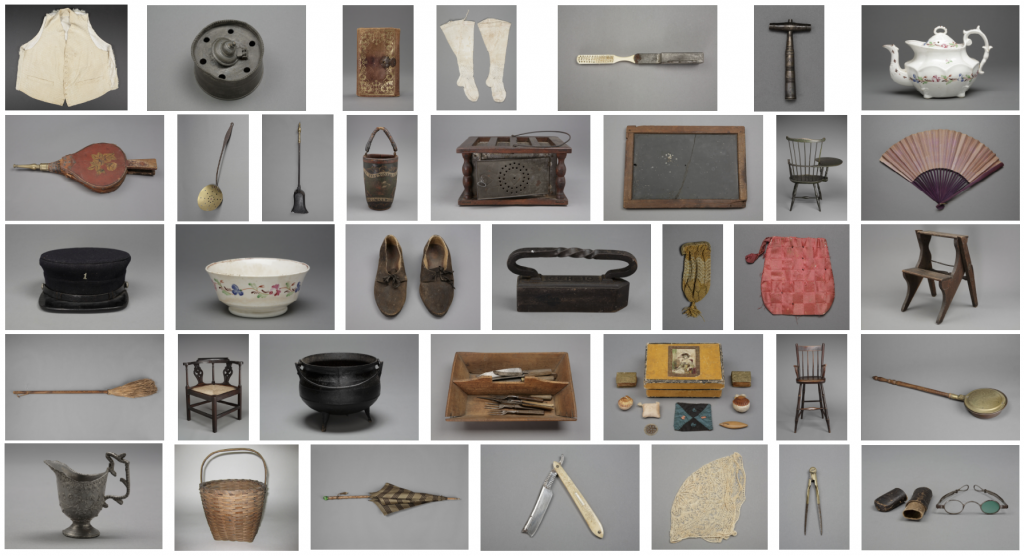
Michel Foucault’s Preface to The Order of Things : An Archaeology of the Human Sciences can be read as a catalogue in itself — a text that inventories systems of thought, names, and classifications (Foucault, 1989, pp. xvi–xxvi). Often described as a manifesto of structuralism, it stands against a certain form of humanism by dismantling the idea of a stable human subject and instead proposing the concept of the épistemè, the underlying structure that shapes what a culture considers knowledge at a given time (Foucault, 1989, pp. xvi–xxvi).
In this sense, the Preface functions both as an introduction and as an inventory itself : Foucault lists his predecessors, maps intellectual lineages, and enumerates the methodological orders that have governed Western knowledge. His text mimics the very mechanisms he analyses. It is rhythmically built from sequences of repetition and accumulation :
394 commas
44 semicolons
41 identifiable lists
5 repetitions
punctuate the pages.
Terms such as
56 order
8 classification
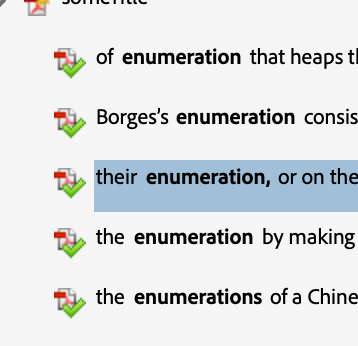
6 enumeration
6 system
2 list
recur like motifs, forming a linguistic taxonomy that mirrors his argument, as if self-referencing the structure of the text.
The repetition of
9 Borges
4 Chinese encyclopedia
13 other names Roussel, Keynes, Cantillon, Tournefort, Linnaeus, Buffon, Cuvier, Darwin, Bauzée, Law, Véron de Fortbonnais, Turgot
underscores the significance of his peers in his demonstration. The ‘Chinese encyclopedia’ whose absurd categories destabilise the reader’s sense of logic. This anecdote becomes Foucault’s demonstration of how every system of order is culturally specific, and how each period invents its own grid of intelligibility.
By analysing the Preface through an inventory, its writing mechanics are revealed as inseparable from its philosophical argument. Each list, each comma, each repetition is not decorative but conceptual. They build a textual space that mirrors Foucault’s archaeology. The Preface is therefore a structural performance, a ‘list of lists’ where the medium embodies the message. Through the enumeration of names, systems, and methods, Foucault shows that to catalogue is already a constructed worldview.
Reference :
- Foucault, M. (1989) ‘Preface’, in The Order of Things: An Archaeology of the Human Sciences. London: Routledge. [1966], pp. xvi–xxvi.