Tag: methods of translating

  • Written response 3.0

    A poor image is the ghost of an image. It is an image that followed a process at the expense of its own meaning, changing its focus. From being uploaded to downloaded and shared, images undergo systematic modifications where the outcome is uncertain and uncontrolled (Steyerl, 2012, pp. 31–45).

    I chose to explain Hito Steyerl’s In Defence of the Poor Image according to the Conditional Design Manifesto from the Conditional design workbook . This manifesto explains the concept of conditional design where the approach is more valued than the chosen media, where graphic design becomes a tool or an instrument. Because conditional design is about designing design, workshops are described as games, with a set of conditions and rules.

    I translated Hito Steyerl’s text into a workshop game to demonstrate the transformative and collective method of creation of poor images.

    Workshop
    IN DEFENSE OF THE POOR IMAGE

    X Play with multiple participants. X The game takes place in a world that idolizes high-quality images

    1, • Preparation
    1.1, Choose an original, fixed image.

    2, • Circulation
    2.1, Make it circulate outside official economies — on file-sharing platforms, torrents, or social media.
    2.2, Make it mutate : copies, downloads, and reshares add layers of translation and context.
    2.3, Challenge aesthetic and economic hierarchies : poor images are democratic in access but highlight global inequalities.
    2.4, Encourage collective circulation rather than fixed ownership, like artworks confined to museums.

    3, • Transformation
    3.1, Each copy may alter contrast, color, or size.
    3.2, Every degradation or glitch adds history, authorship, and survival value.
    3.3, Resist the art world’s obsession with perfection, and exclusivity.

    4, • Hierarchies of Resolution
    4.1, Prevent high-resolution images from dominating the space.
    4.2, Prioritize communication and movement over perfection.
    4.3, Bring marginalized or radical visual cultures to light, instead of relegating them to the digital margins.
    4.4, Defend access, democracy, and the right to visual culture against corporate and institutional control.

    5, • Politics of the Poor Image
    5.1, Mirror the precarious conditions of cultural workers and the commodification of media.
    5.2, Make the images migrate: cross borders, languages, and formats freely, like displaced or fragmented communities.
    5.3, Make it visual form of resistance — preserving political cinema, marginalized histories, and ideas excluded from mainstream distribution.

    6, • Endgame
    6.1, The game ends when the original is untraceable.
    6.2, The poor image survives through circulation and movement.

    Outcome :
    The poor image is a low-resolution, often pirated or compressed copy of an original work. Its “poverty” does not diminish its cultural or political power; rather, it embodies access, circulation, mutation, and collective authorship. Poor images become living archives, resisting control while connecting communities and histories across space and time.

    References :

    – Maurer, L. (2013) Conditional Design Workbook. Amsterdam: Valiz, pp. ii–xiv.

    – Steyerl, H. (2012) In Defence of the Poor Image. In: The Wretched of the Screen. Berlin: Sternberg Press, pp. 31–45.
  • Week 7 : weaving

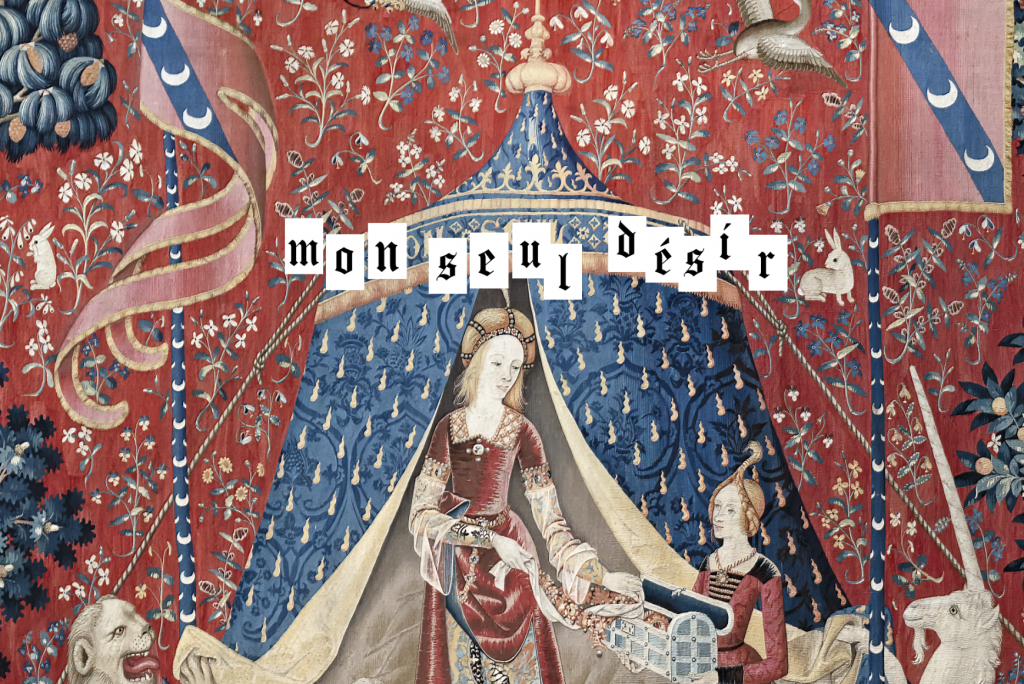
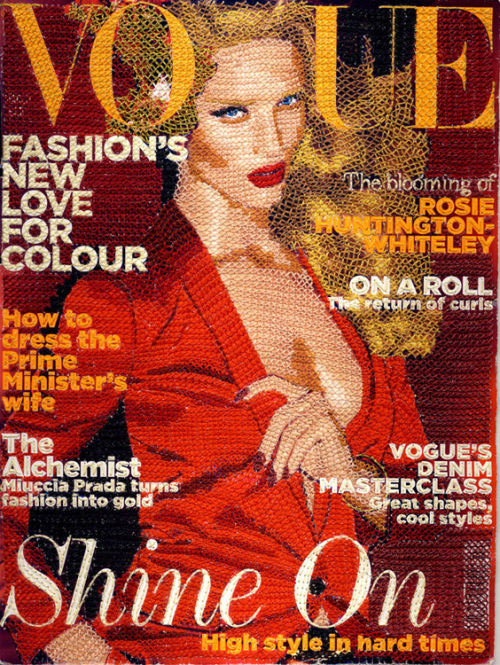
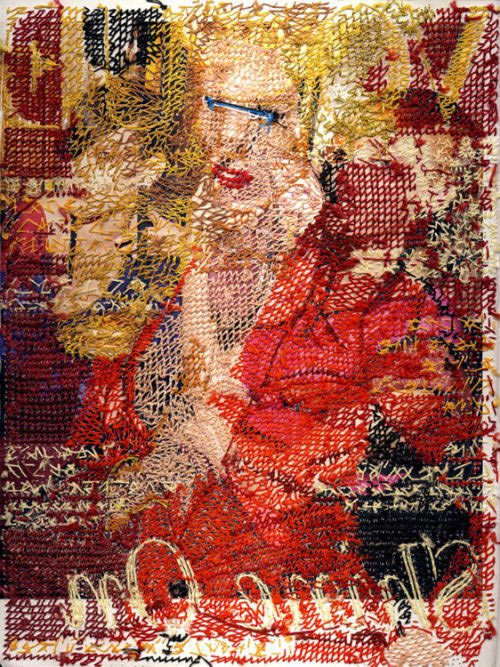
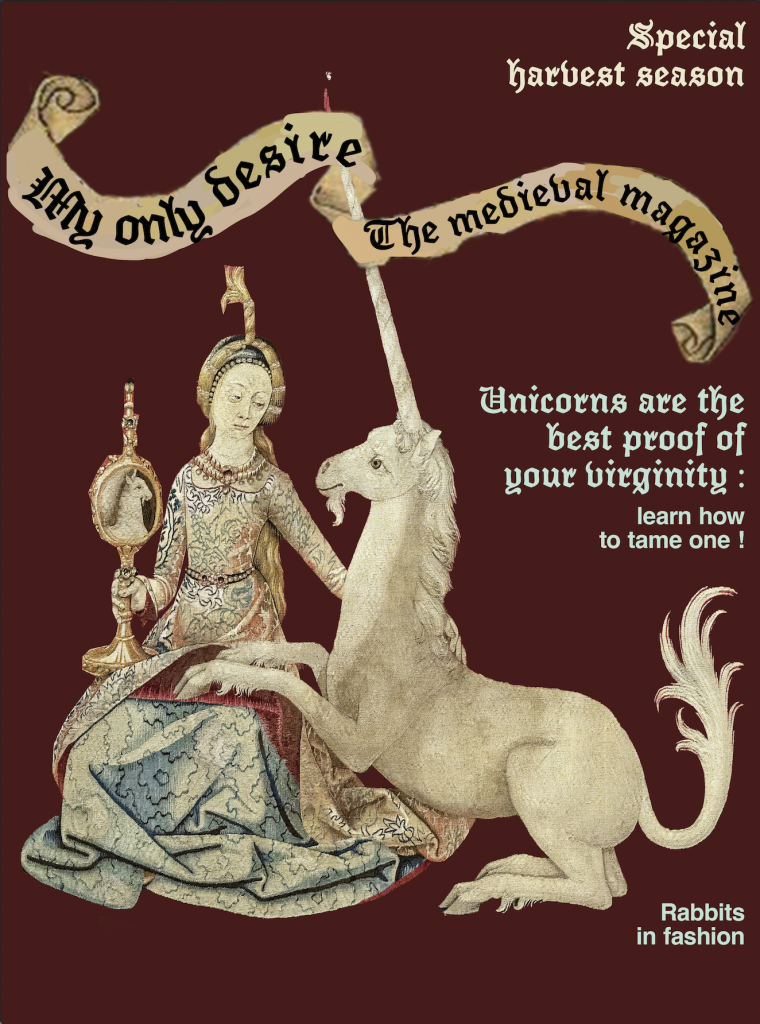
    I tried parodying a modern magazine cover to highlight societal expectations placed on women’s bodies.

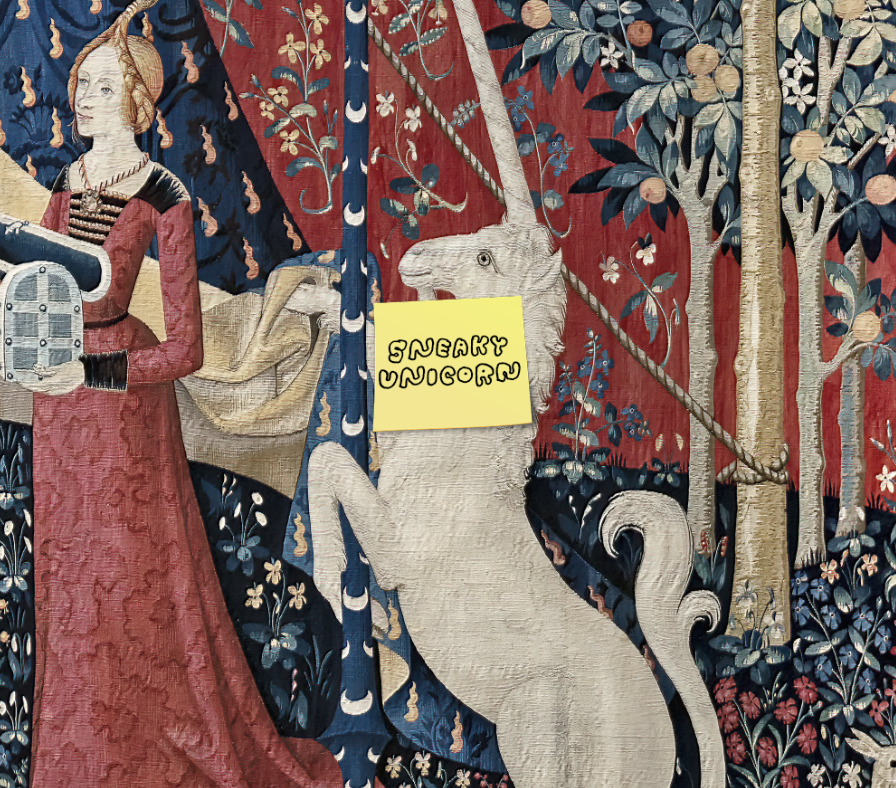
    Modern interpretation using post notes.

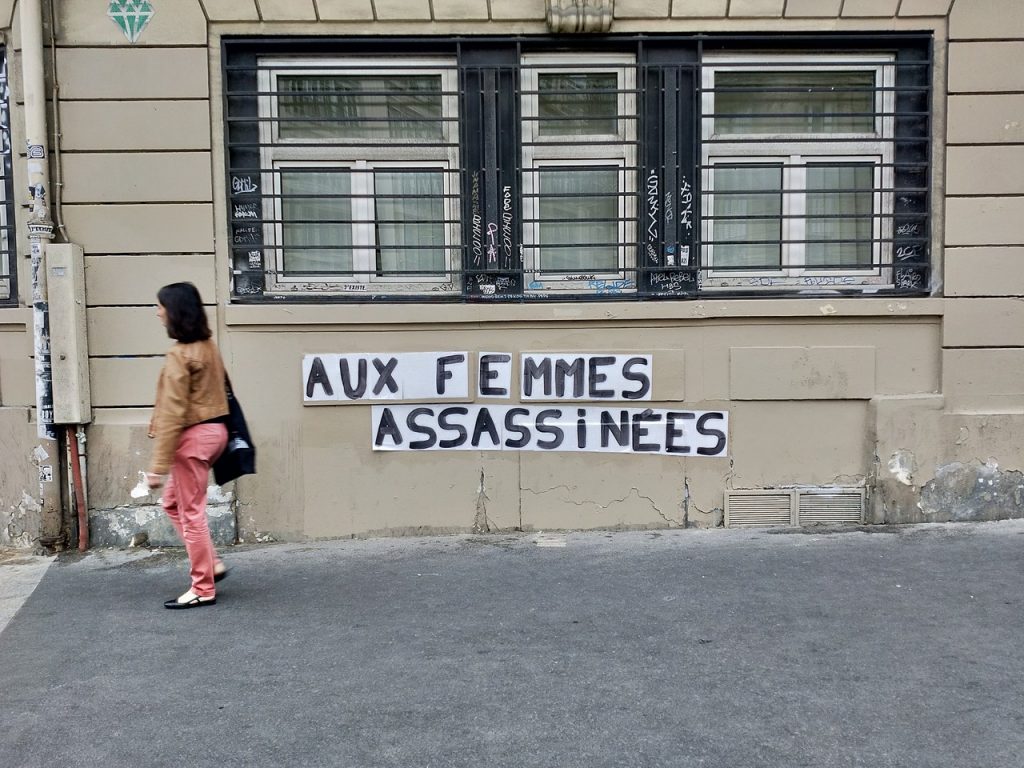
    Feminist collage in Paris

    I tried to mimic the protest signs against feminicides.

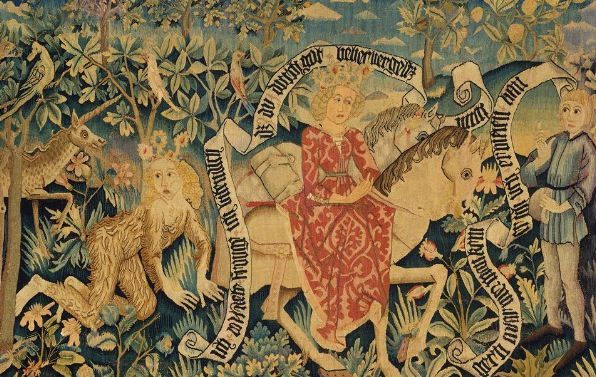
    The Story of the Buzzard, 1480-1490, Unknown artist, Strasbourg

    I kept the original tapestry intact and made my drawings as seamless as possible. My aim was not to change the image, but to reveal its underlying meaning. The illustrations blend into the mille-fleurs and the animals, becoming part of the tapestry’s language rather than disrupting it. So I took inspiration of how they tell the story in The Story of the Buzzard tapestry.

    Tried drawing like weaving the tapestry, to modifie it.

    First outcome

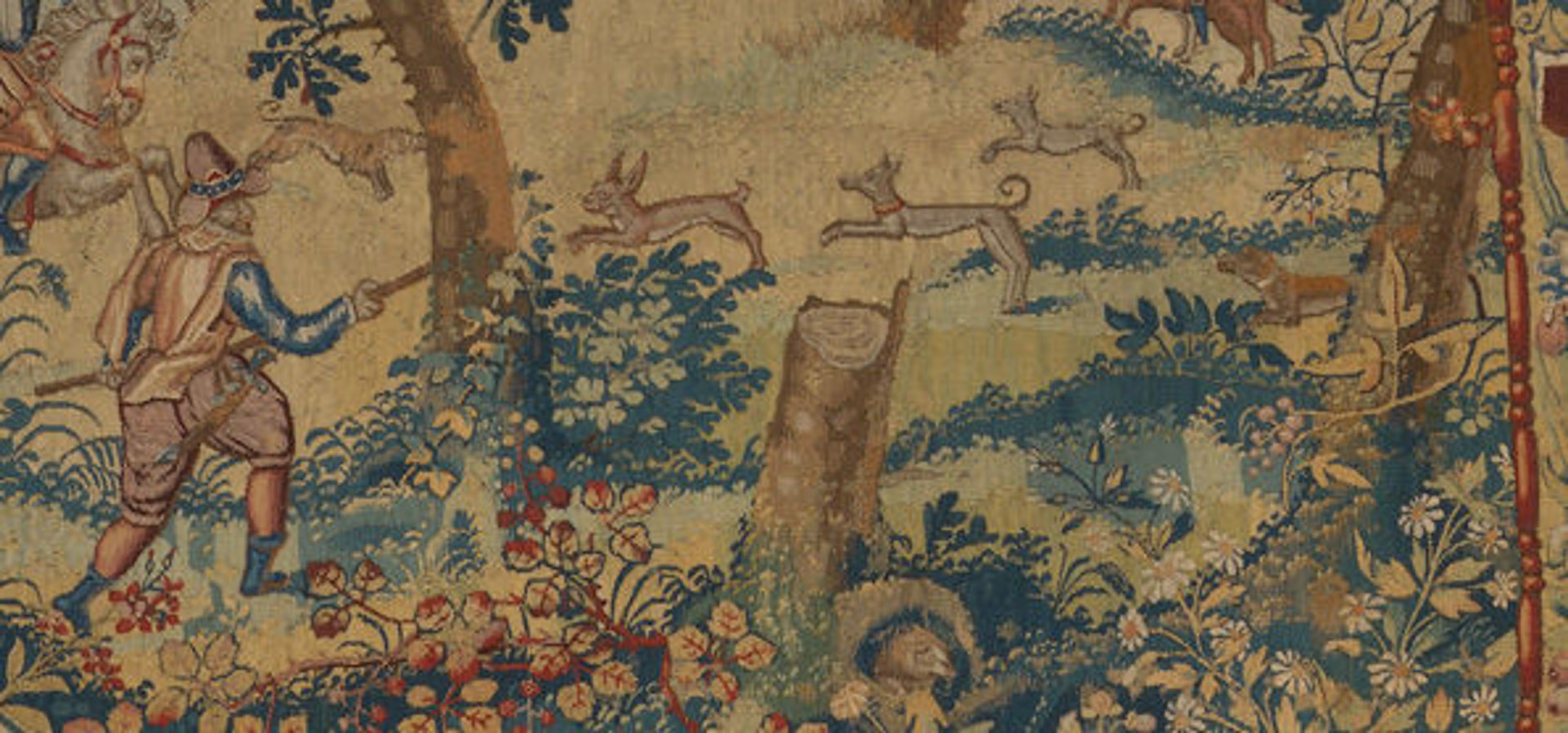
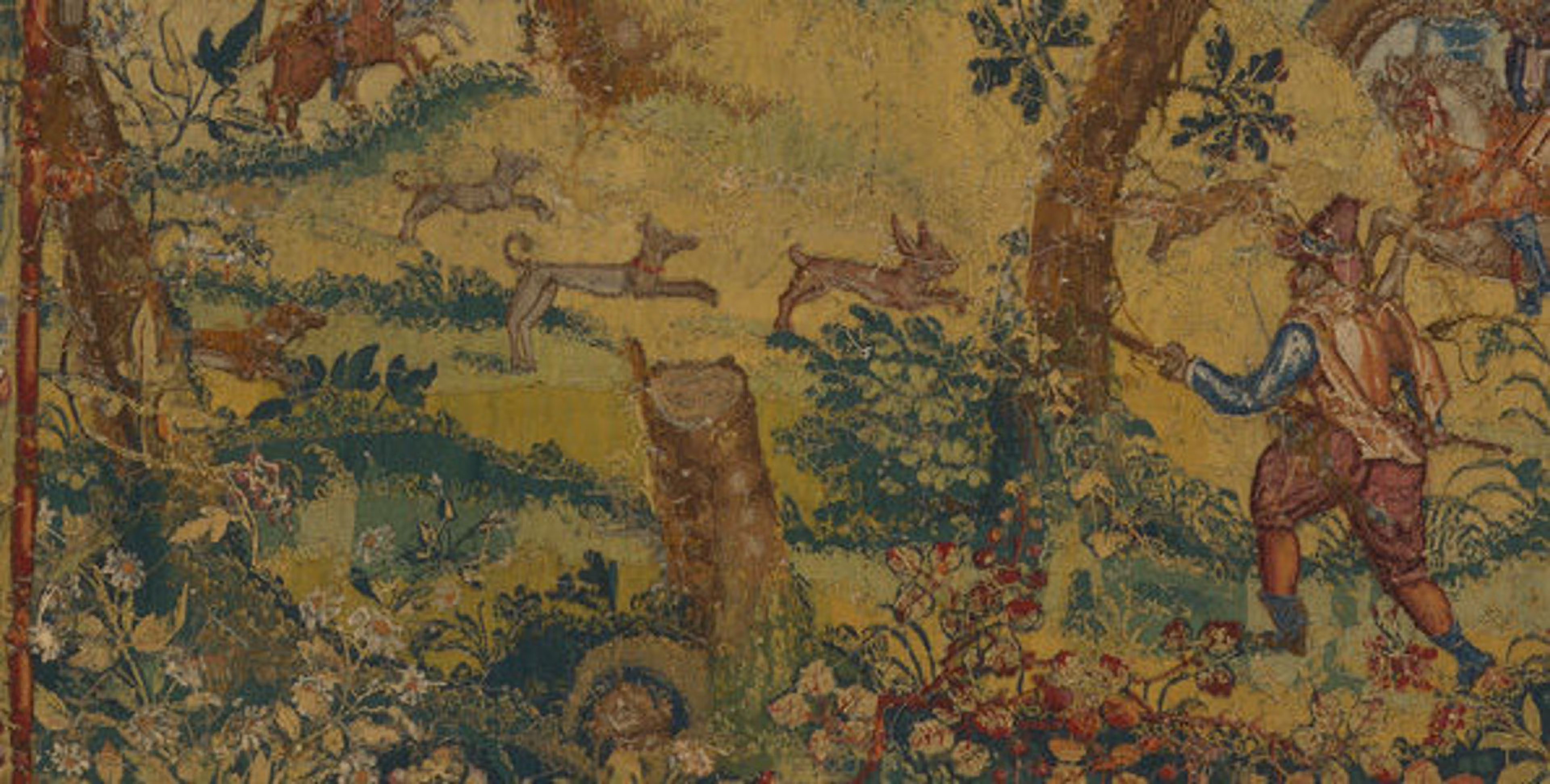
    Du ring my research for the magazine cover experiment I went upon this artwork which lead me to do more research on the back of tapestries. I learned that conservators often turn to the back of the textile during restoration. Protected from light exposure, the back preserves pigments that are significantly more accurate than those on the faded front. In this sense, the reverse becomes the most authentic record of the tapestry’s original appearance.

    Anonymous Flemish weavers. Hunters in a Landscape, ca. 1575–95. Wool, silk; The Metropolitan Museum of Art, New York.
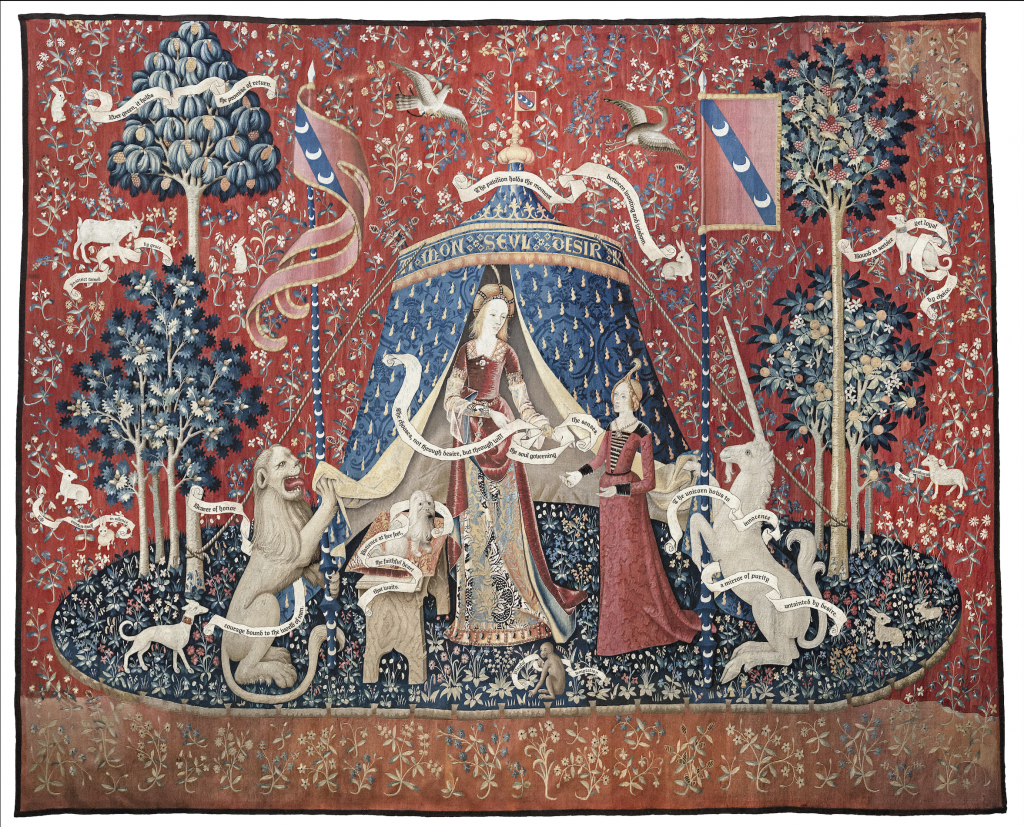
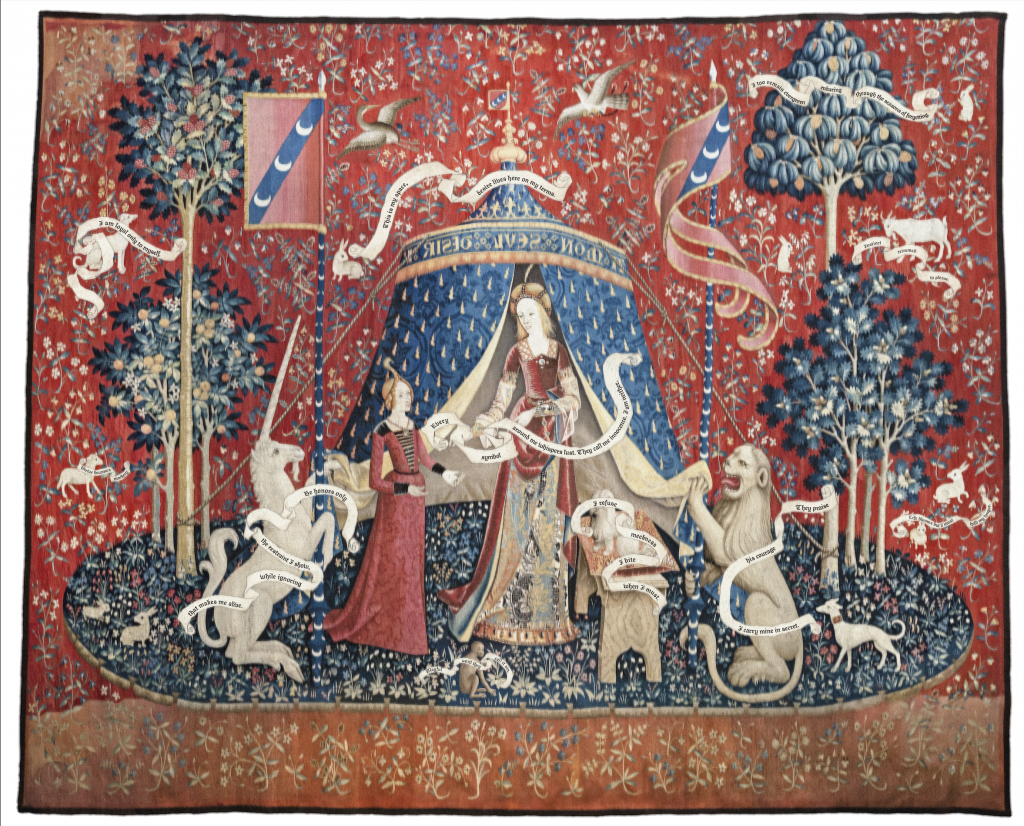
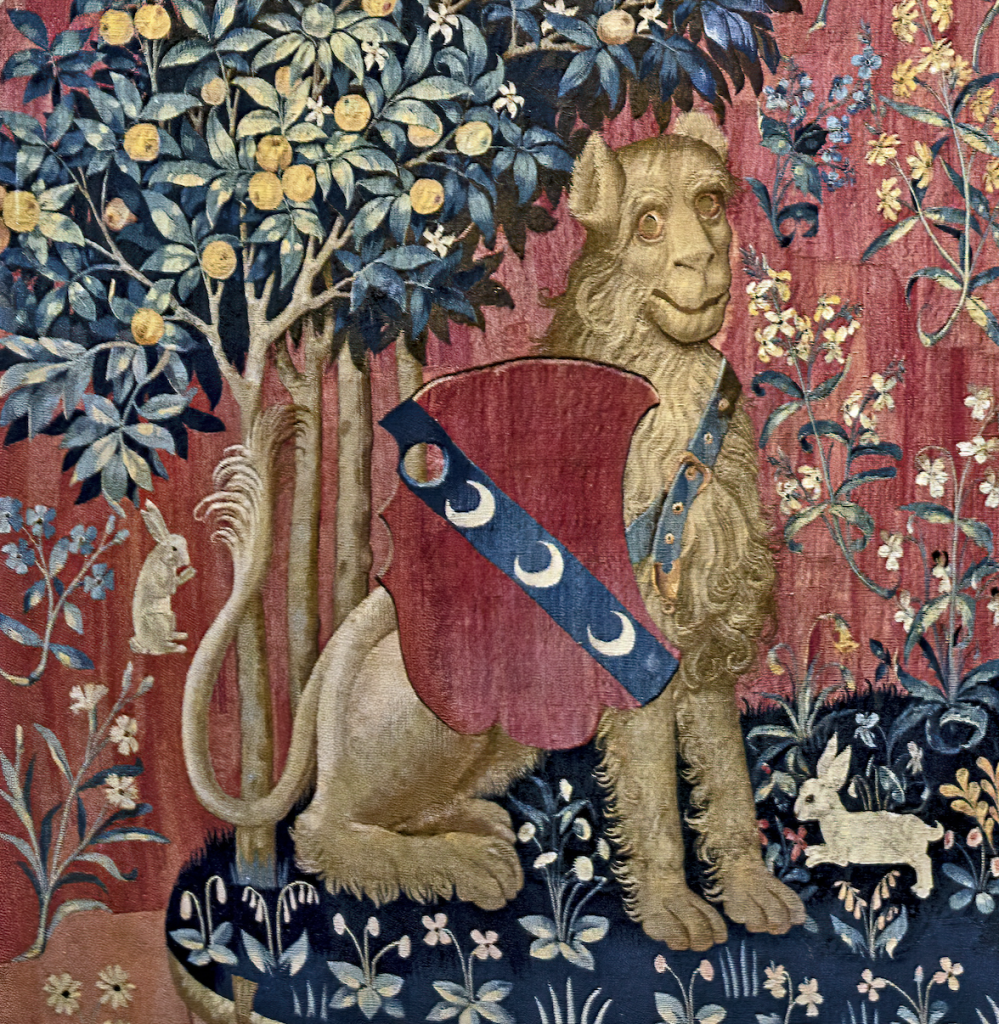
    LionBearer of honor — courage bound to the world of men.They praise his courage — I carry mine in secret.
    GoatInstinct tamed by grace.Instinct trimmed to please.
    Rabbits Life renews itself in silence.Life blooms but I must hold my tongue.
    Pine treeEver green, it holds the promise of return.I too remain evergreen — enduring through the seasons of forgetting.
    Sitting dogPatience at her feet, the faithful heart that waits.I refuse meekness — I bite when I must.
    PavilionThe pavilion holds the moment between wanting and wisdom.This is my space, desire lives here on my terms.
    DogBound in service yet loyal by choice.I am loyal only to myself.
    LambSacred meeknessVirtue becomes mockery
    UnicornThe unicorn bows to innocence, a mirror of purity untainted by desire.He honors only the restraint I show, while ignoring all that makes me alive.
    MonkeyPlayful temptationPlayful, until they call it sin.
    LadyShe chooses, not through desire, but through will, the soul governing the senses.Every symbol around me whispers lust. They call me innocence.

    Transforming the tapestry’s traditional symbols into the Lady’s own voice reframes her from a passive emblem of virtue into a conscious, resisting subject.

    The Lady goes from witness to critic of the double standards : surrounded by animals, flowers, and erotic symbols, she is still treated as a “pure” object.

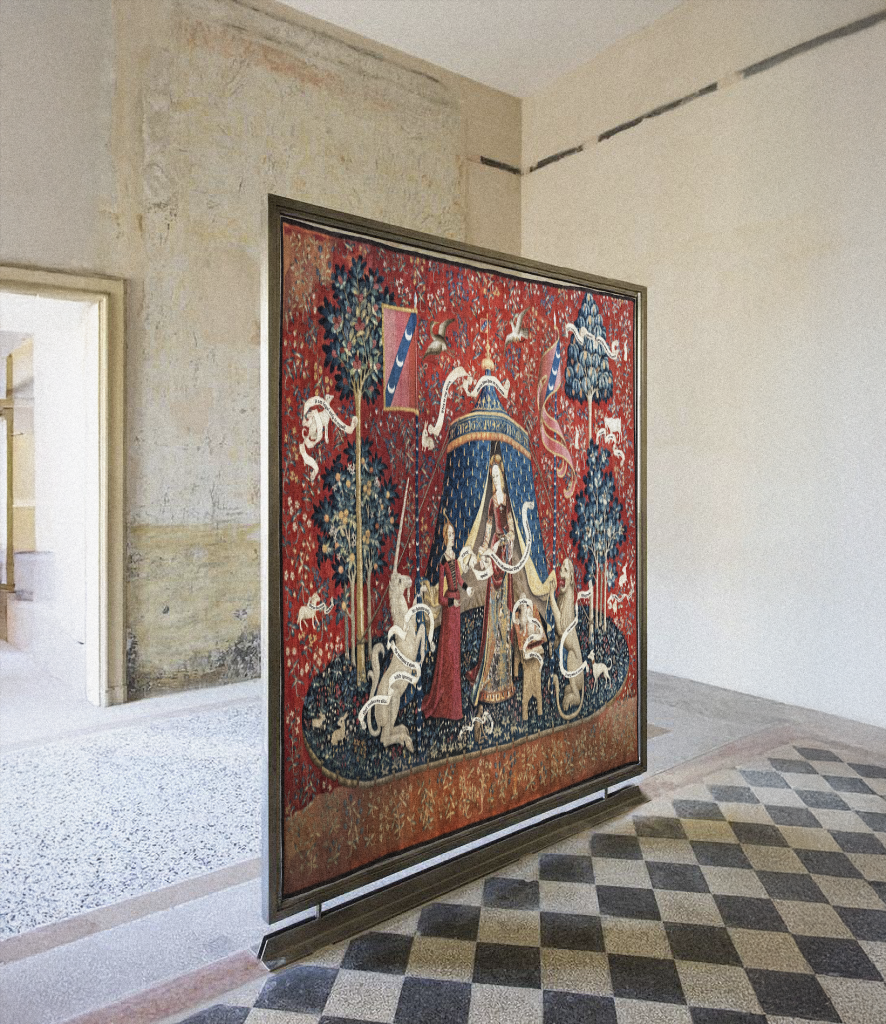
    An exhibition designed so visitors can move freely around the tapestry, allowing them to approach its details up close and view both the front and the back.

  • Week 6 : lots of research

    Tapestries woven in the Middle Ages were mainly intended to decorate civil residences and religious buildings.

    Initially inspired by religion to educate the people, medieval tapestries became more prestigious towards the end of the 14th century, depicting stories illustrating the life of their owner. They were arranged in sets. The Bayeux Tapestry and The Lady and the Unicorn are masterpieces of this period.

    The tapestries accurately reflect the social and political aspects of society in past times. They are images full of mystery that freeze time.

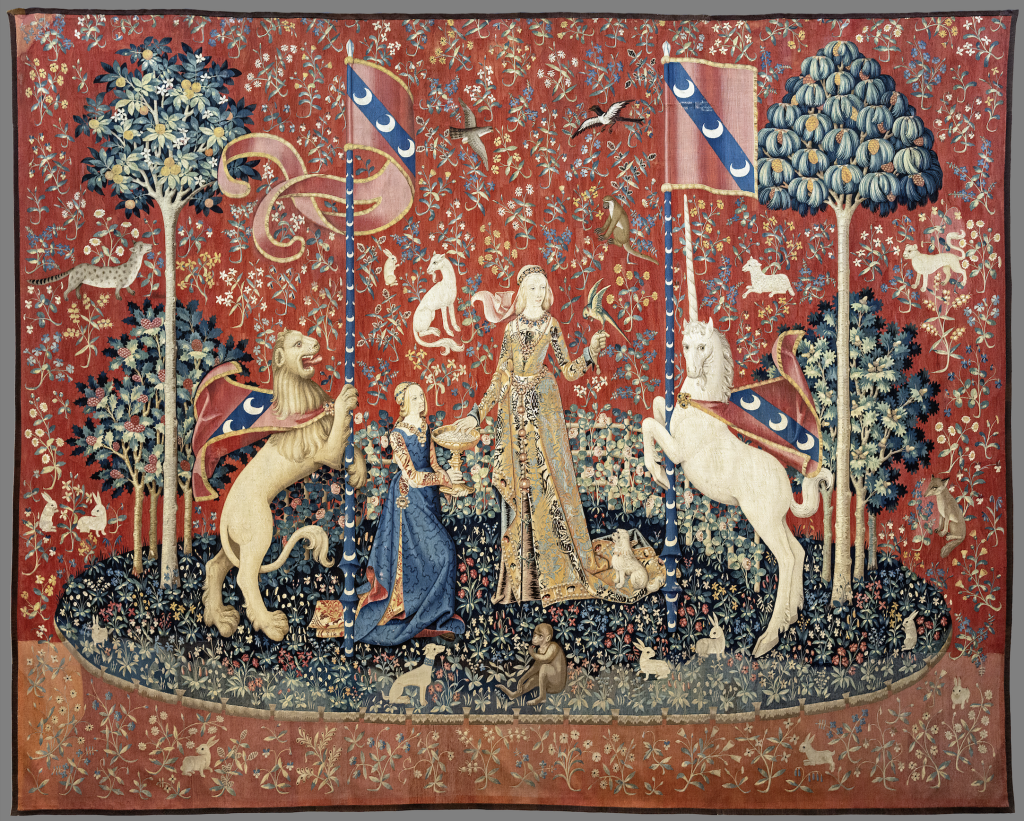
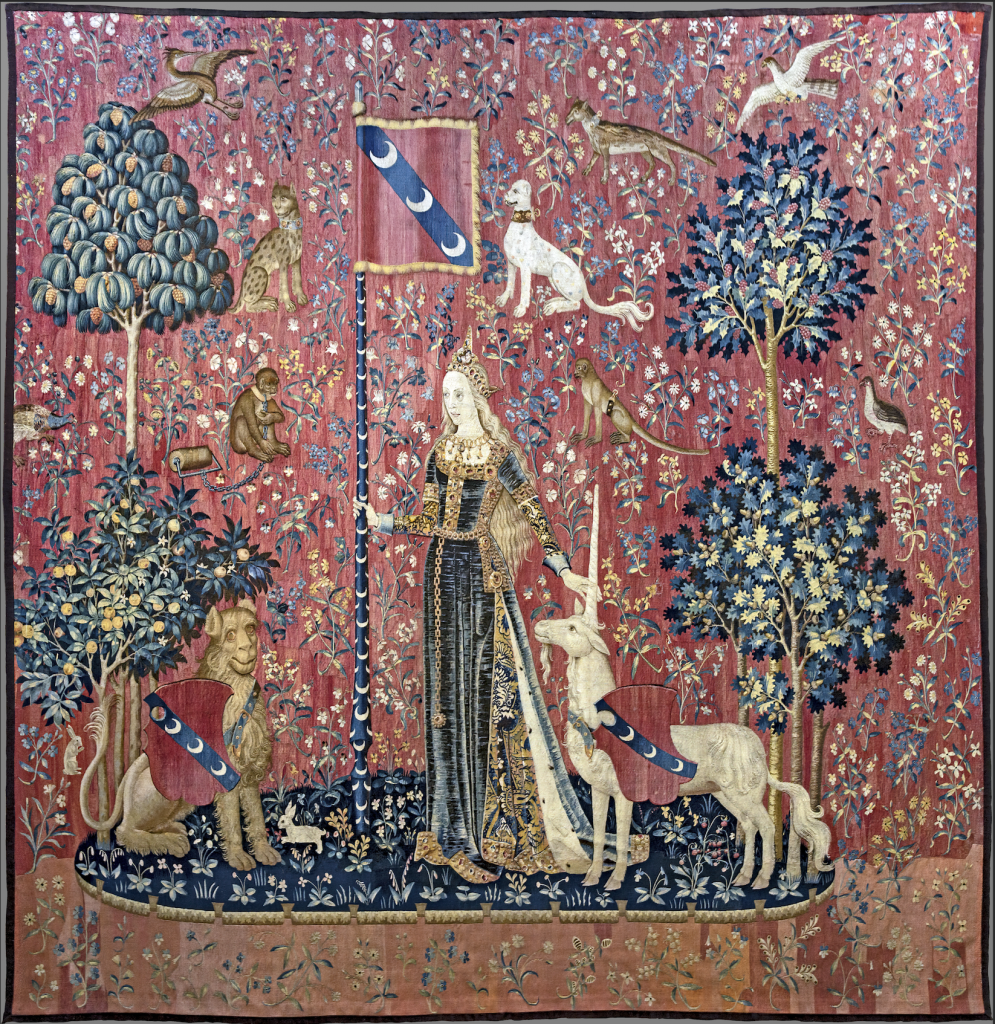
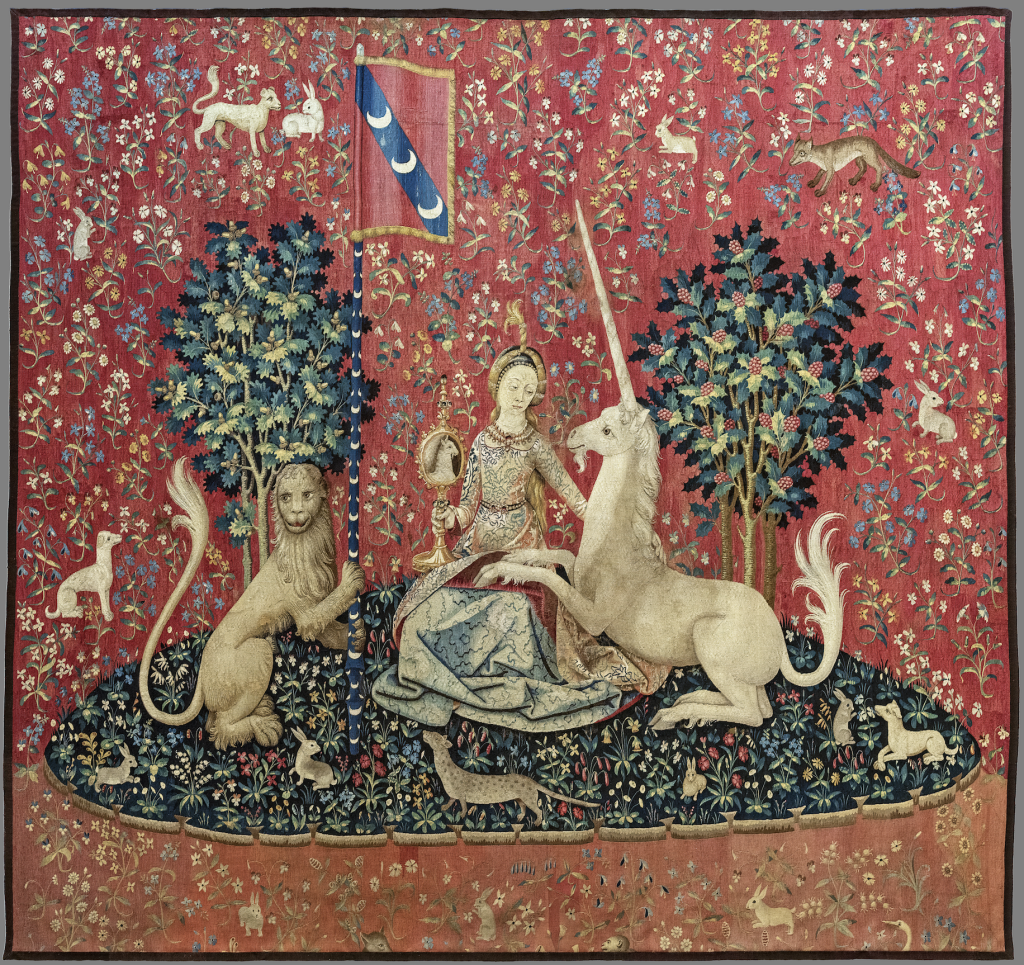
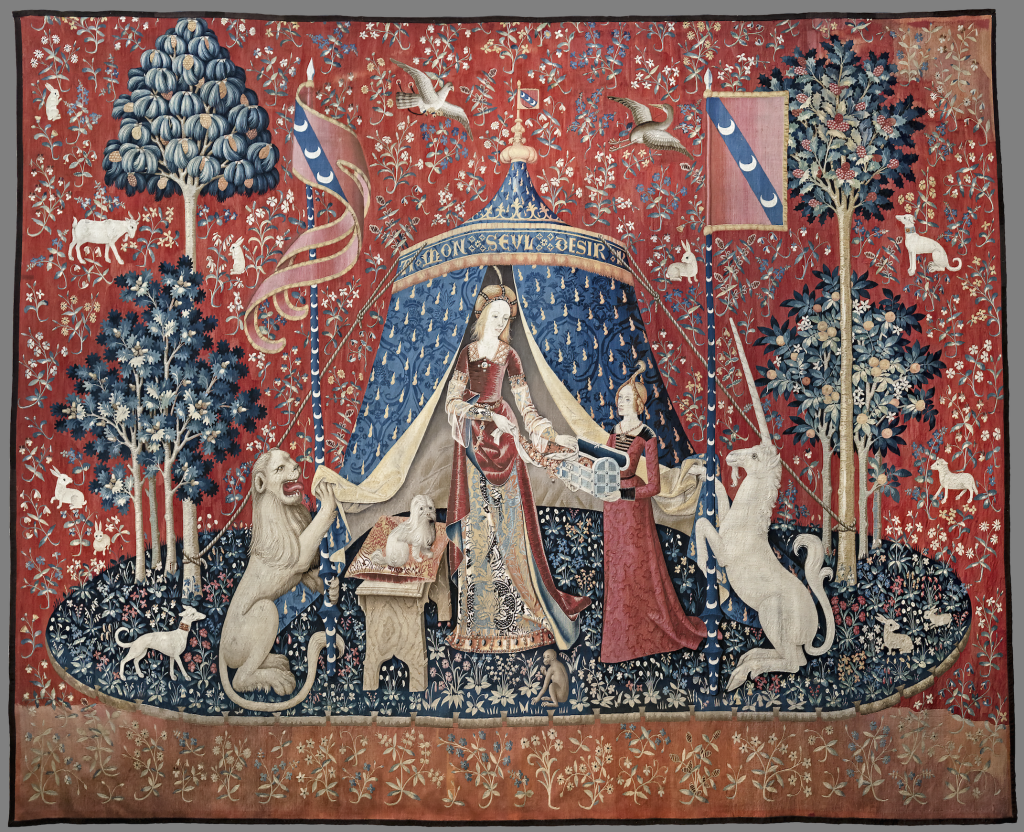
    The tapestry known as The Lady and the Unicorn is a series of six tapestries from the early 16th century. A masterpiece from the early French Renaissance, it is kept at the National Museum of the Middle Ages-Thermes and Hôtel de Cluny in Paris.

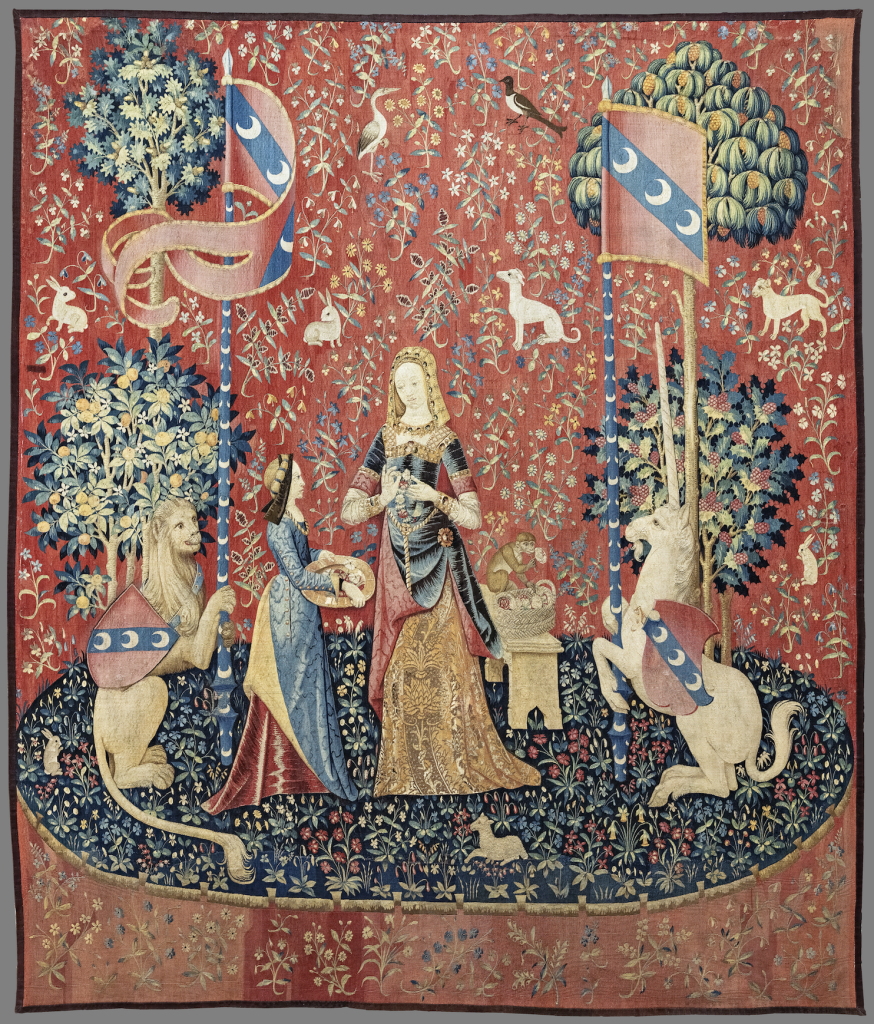
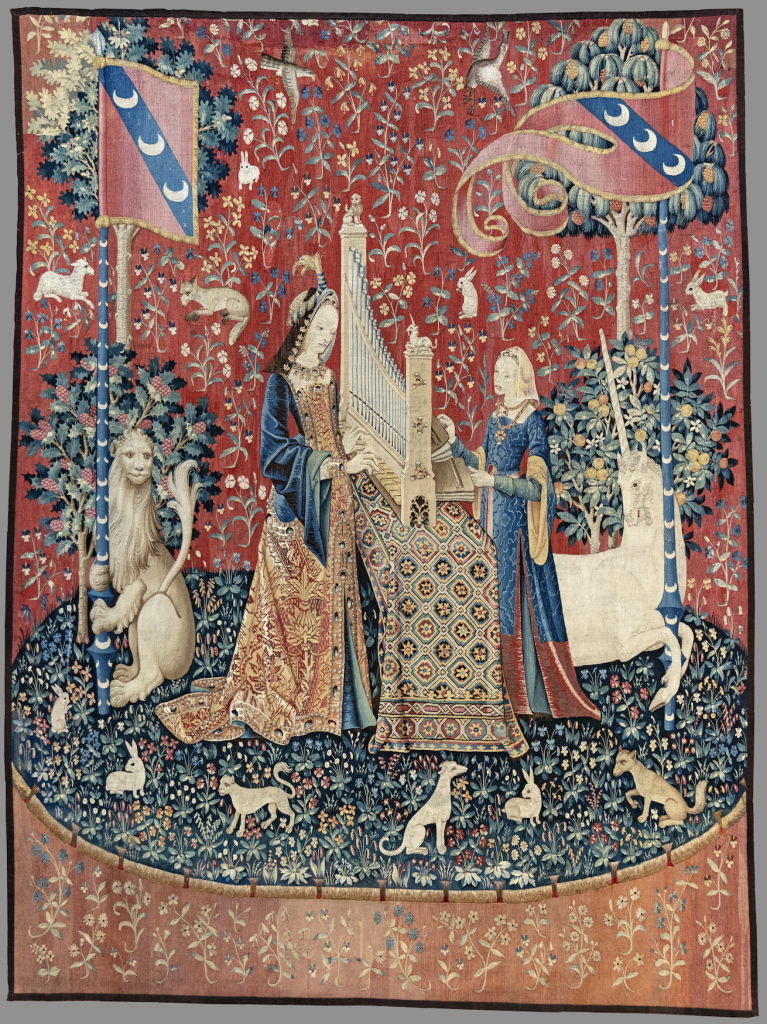
    Five of these representations form an allegory of the five senses, symbolised by the lady’s occupation :

    • Sight: the unicorn gazes at itself in a mirror held by the lady;
    • Smell: while the lady is making a crown of flowers, a monkey sniffs the scent of a flower it has picked.
    • Hearing: the lady plays a small organ.
    • Taste: the lady takes what could be a sugared almond from a cup held out to her by her servant and offers it to a bird.
    • Touch: the lady holds the unicorn’s horn in her hand, as well as the pole of a standard.

    The sixth tapestry, representing the sixth sense, can only be interpreted by deduction from the hypothesis of the five senses. Framed by the initials A and V or I, the motto ‘My only desire’ can be seen at the top of the blue tent.

    1. Translation of the language of heraldry

    My first method would be to translate literally what is represented on the tapestries using the iconology of old images where every tree, animal, object has a meaning, and the understanding of the coat of arms, their colours and symbols.

    2. My One Desire

    The sixth tapestry is still a mystery for historians. The phrase written on the tent can have different meanings in French. It can be translated as ‘My One Desire’ but also as ‘According to my will only’.

    Anagrams of the motto can also be found :

    DON LE URAI SEMS : Donne le vrai sens Give true meaning
    SENS AMOR DEUIL : Sans amour deuil Without love, mourning
    LE UI SENS D AMOR : Le VIème sens d’amour The sixth sense of love

    The tapestry raises many questions :

    • Could the sixth sense be the heart that governs all the other senses, as the theologian Jean Gerson wrote at the end of the 14th century? (The writings of the Chancellor of the University of Paris, Jean Gerson  (1363 -1429) mention ‘six senses – five external and one internal – namely the heart – which we must master as six schoolchildren.’ He sees the heart as the controller of the physical senses and needing to be schooled to avoid sins such as lust.)
    • Or, to quote a commentary from Plato’s Symposium, could it be the understanding, intelligence and beauty of the soul?
    • Is the Lady renouncing pleasure by placing the necklace in the chest?
    • Is the focus on the importance of moderation in all things, allowing one to enjoy sensual pleasures without becoming enslaved to them?

    3. The Lady

     The lady in the tapestry, with her lily-white complexion, ruby lips and golden hair, is a beauty whose praises have been sung in courtly literature since the 12th century. She is not a portrait of a woman who lived in the Le Viste household, but the embodiment of the ideal woman according to medieval standards.

    She isn’t the subject of the piece, but only an allegory of the senses, so what of her thoughts, her point of view and her desires?

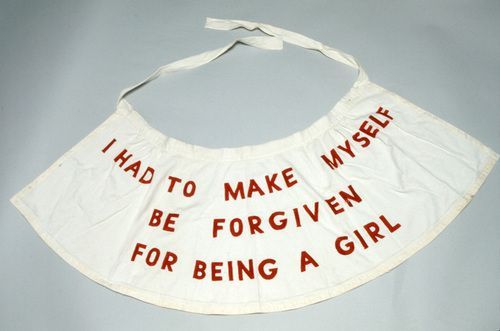
    Bourgeois, L. (1992) Garment from the performance “She Lost It…”. [Artwork].

    Seeing this tapestry with a feminist point of view, made me think of Louise bourgeois’ work, as part of the ‘New Tapestry’ movement.

    The Jean Lurçat Museum of Contemporary Tapestry, in its exhibition ‘Tapestry? From Picasso to Messager’, examines the place and importance of this textile art, as well as its status in contemporary art. For female artists such as Louise Bourgeois, textiles have become a symbol of protest against their status in Western society.

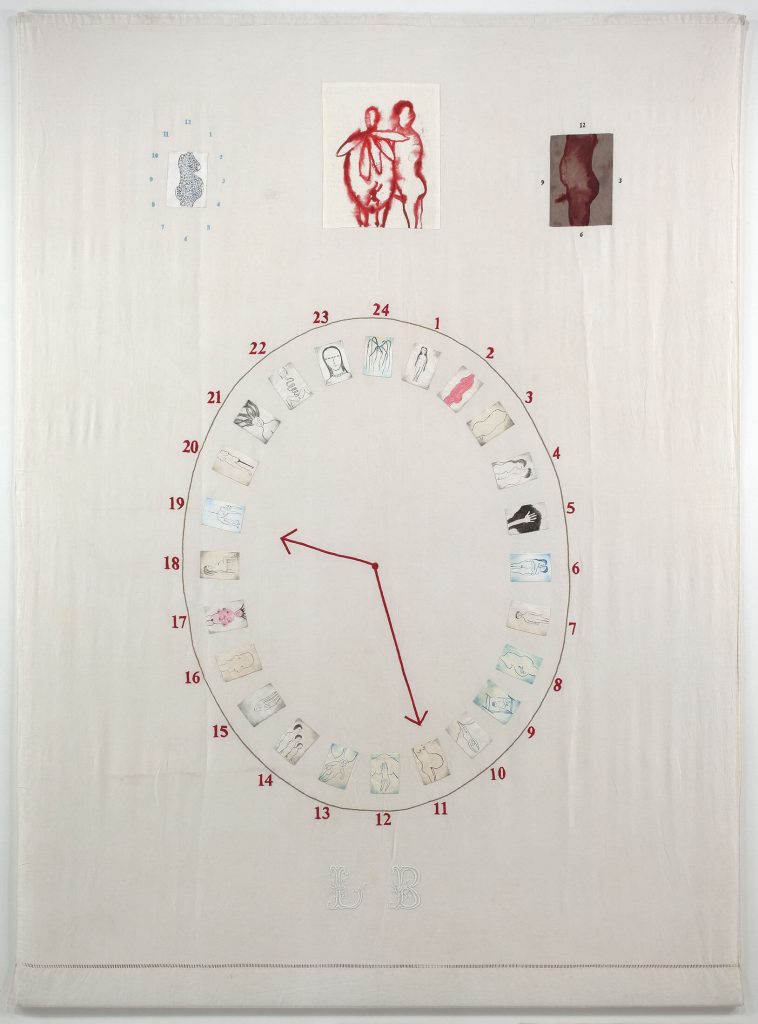
    Bourgeois, L. (2009) Self Portrait. [Artwork].

    In this artwork, she explores life as a girl, woman, wife, mother, and artist, through her physical and emotional transformation as the hours advance.

    4. The unicorn

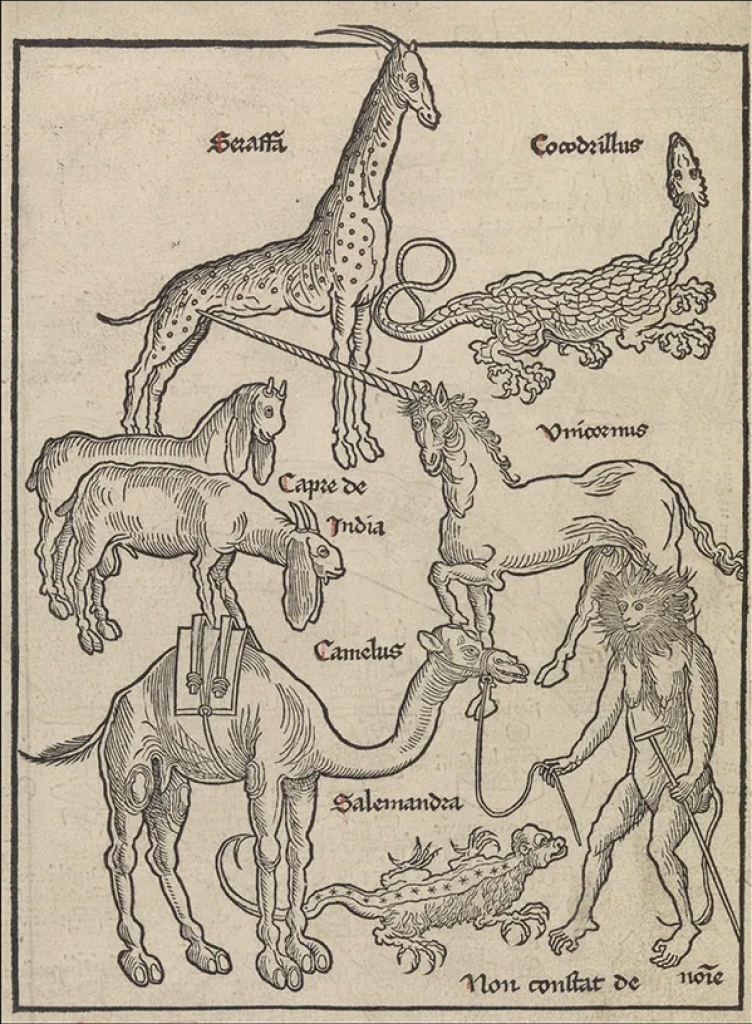
    Reuwich, E. (1486) Animals of the Holy Land, in Breydenbach, B. von. Peregrinatio in terram sanctam. Mainz: Erhard Reuwich.

    Unicorns were believed to be real animals in Medieval times. Some were supposedly spotted in Mount Sinai. Another print locates their native habitat in the Americas. Eminent scholars and explorers reported seeing this wild animal during their expeditions to distant lands, particularly India. However, it seems that the animal observed by the explorers was in fact the Javan rhinoceros, which has a horn on its skull.

    It was in the 12th century that unicorns became a symbol of purity. They were associated with the Passion of Christ and his sign of chastity. Its horn was believed to be an antidote to poison and could purify contaminated water.

    The belief was that only a virgin could tame a unicorn, with its reference to sexual innocence and experience

    The portrait of the creature is fierce, tender, and pure. He embodies matters of faith, as well as the heart. In wedding portraits, he represents the taming of the beloved.