Tapestries woven in the Middle Ages were mainly intended to decorate civil residences and religious buildings.
Initially inspired by religion to educate the people, medieval tapestries became more prestigious towards the end of the 14th century, depicting stories illustrating the life of their owner. They were arranged in sets. The Bayeux Tapestry and The Lady and the Unicorn are masterpieces of this period.
The tapestries accurately reflect the social and political aspects of society in past times. They are images full of mystery that freeze time.
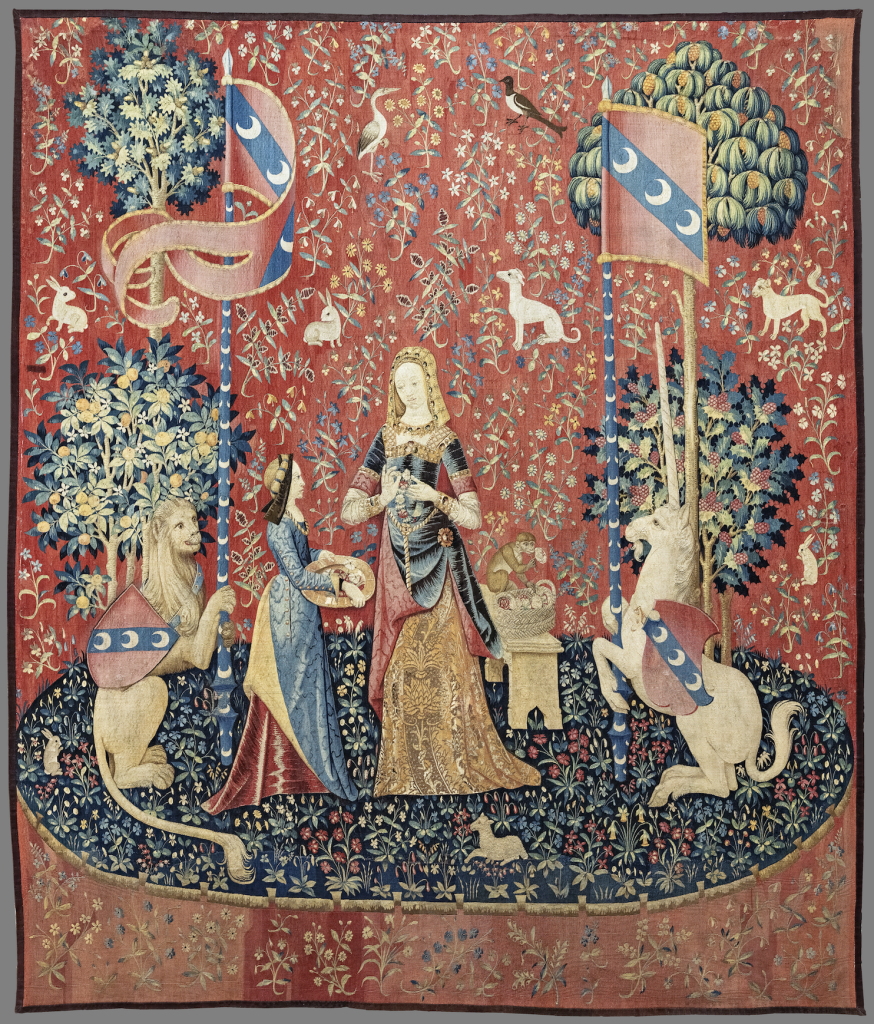
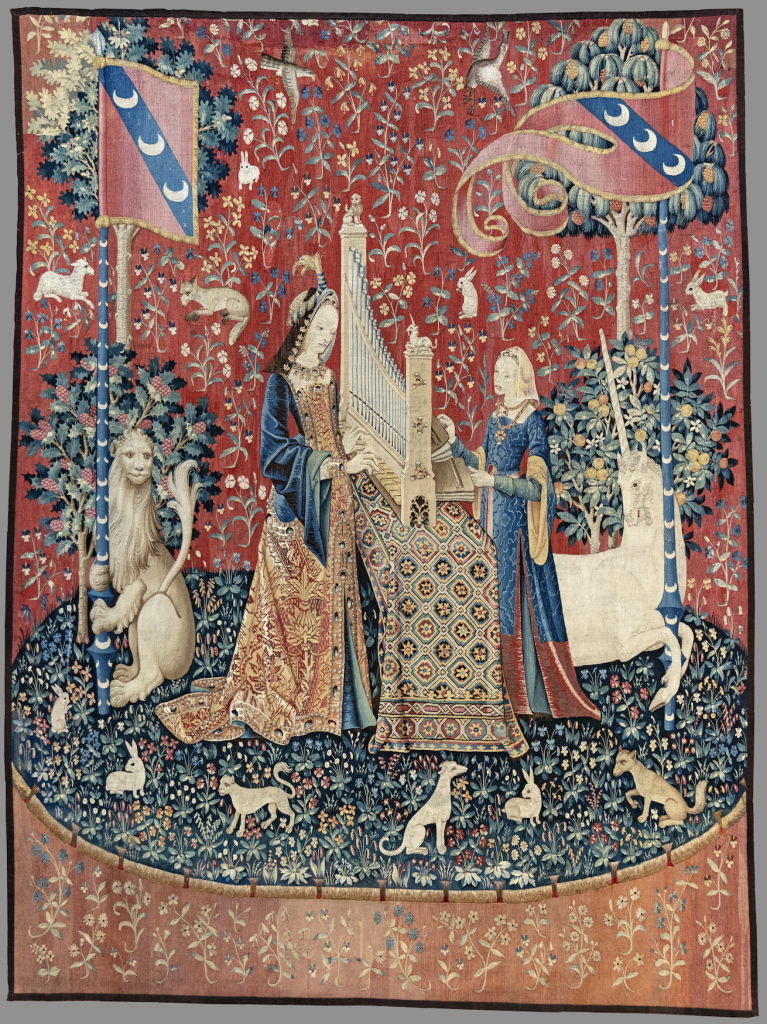
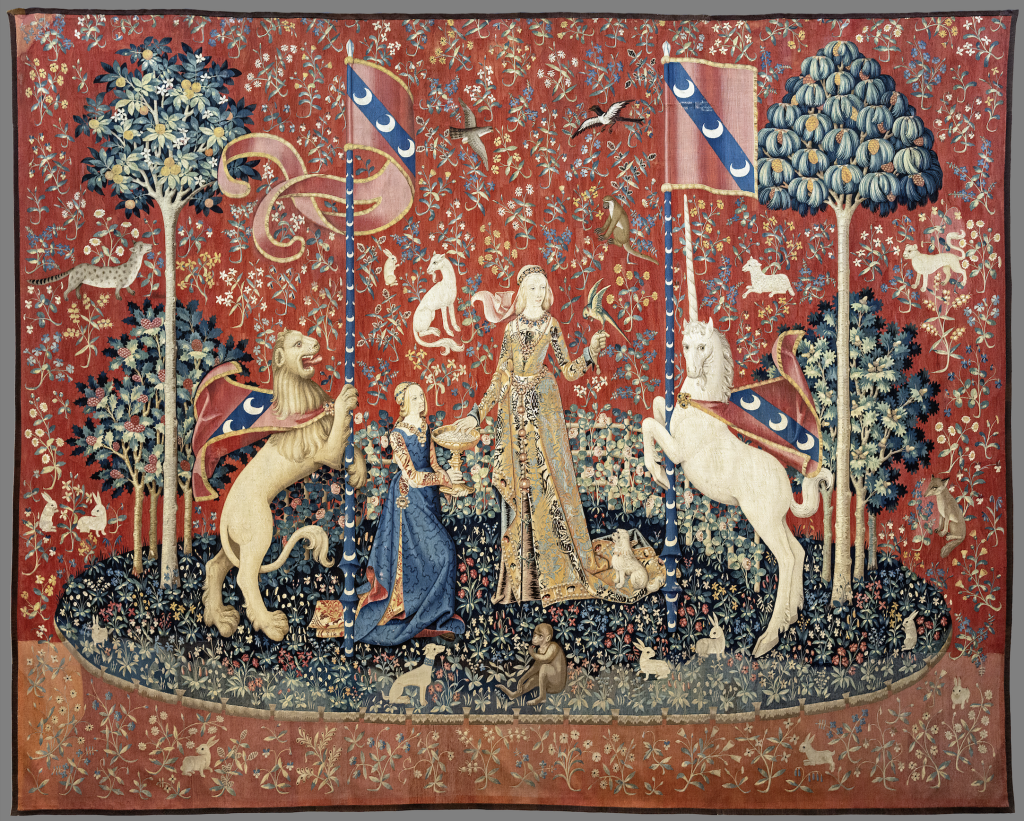
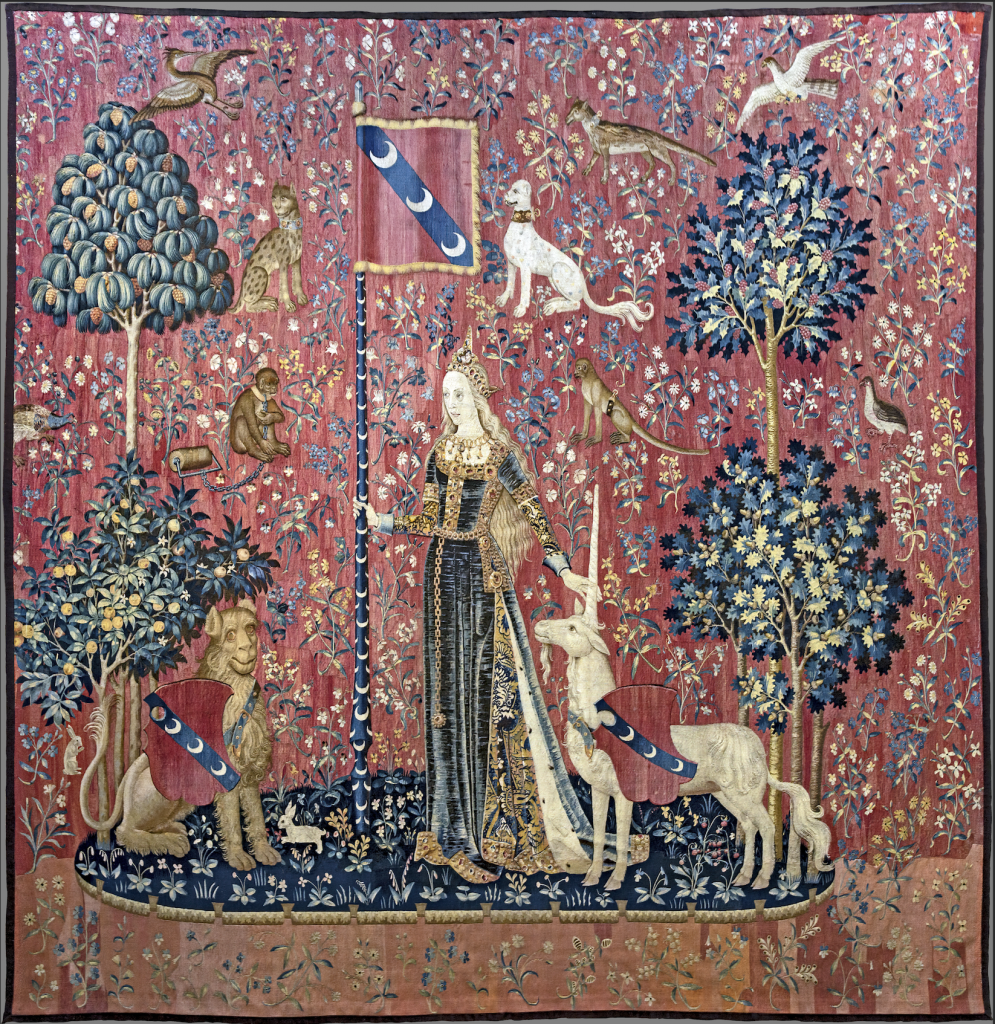
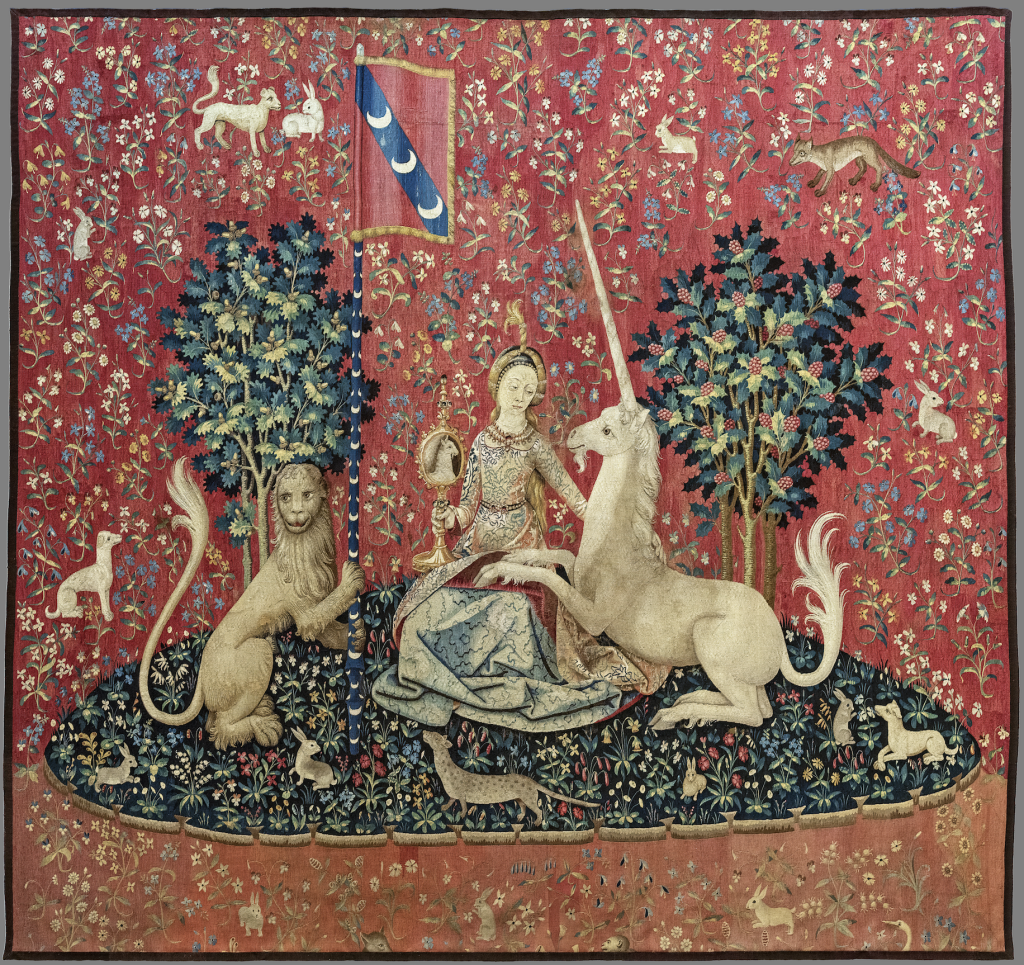
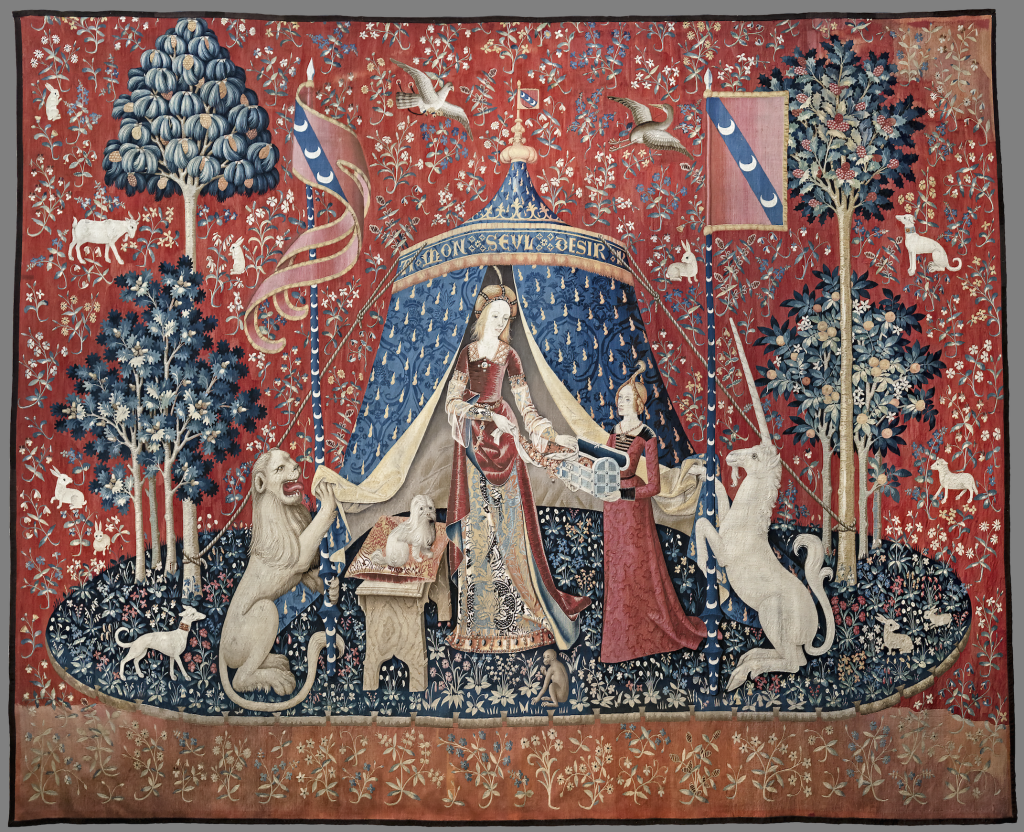
The tapestry known as The Lady and the Unicorn is a series of six tapestries from the early 16th century. A masterpiece from the early French Renaissance, it is kept at the National Museum of the Middle Ages-Thermes and Hôtel de Cluny in Paris.
Five of these representations form an allegory of the five senses, symbolised by the lady’s occupation :
- Sight: the unicorn gazes at itself in a mirror held by the lady;
- Smell: while the lady is making a crown of flowers, a monkey sniffs the scent of a flower it has picked.
- Hearing: the lady plays a small organ.
- Taste: the lady takes what could be a sugared almond from a cup held out to her by her servant and offers it to a bird.
- Touch: the lady holds the unicorn’s horn in her hand, as well as the pole of a standard.
The sixth tapestry, representing the sixth sense, can only be interpreted by deduction from the hypothesis of the five senses. Framed by the initials A and V or I, the motto ‘My only desire’ can be seen at the top of the blue tent.
1. Translation of the language of heraldry
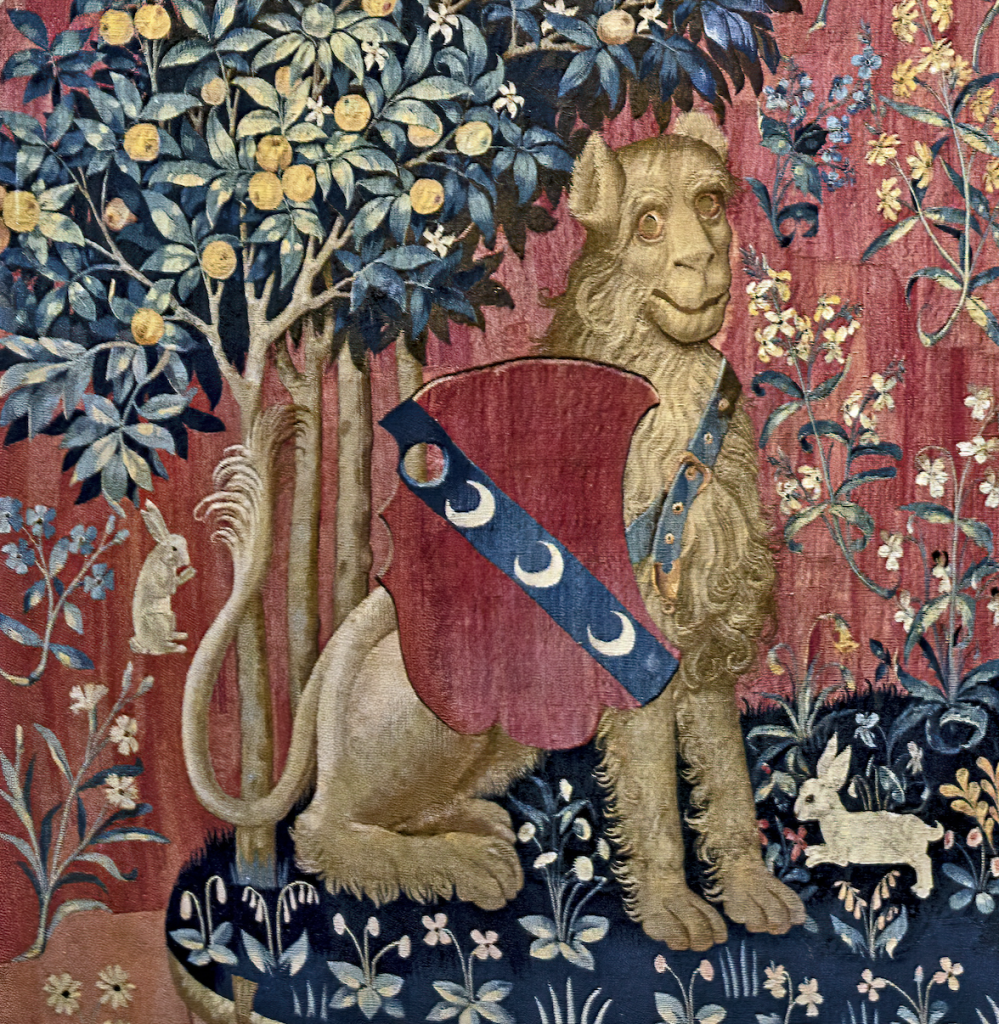
My first method would be to translate literally what is represented on the tapestries using the iconology of old images where every tree, animal, object has a meaning, and the understanding of the coat of arms, their colours and symbols.
2. My One Desire
The sixth tapestry is still a mystery for historians. The phrase written on the tent can have different meanings in French. It can be translated as ‘My One Desire’ but also as ‘According to my will only’.
Anagrams of the motto can also be found :
DON LE URAI SEMS : Donne le vrai sens Give true meaning
SENS AMOR DEUIL : Sans amour deuil Without love, mourning
LE UI SENS D AMOR : Le VIème sens d’amour The sixth sense of love
The tapestry raises many questions :
- Could the sixth sense be the heart that governs all the other senses, as the theologian Jean Gerson wrote at the end of the 14th century? (The writings of the Chancellor of the University of Paris, Jean Gerson (1363 -1429) mention ‘six senses – five external and one internal – namely the heart – which we must master as six schoolchildren.’ He sees the heart as the controller of the physical senses and needing to be schooled to avoid sins such as lust.)
- Or, to quote a commentary from Plato’s Symposium, could it be the understanding, intelligence and beauty of the soul?
- Is the Lady renouncing pleasure by placing the necklace in the chest?
- Is the focus on the importance of moderation in all things, allowing one to enjoy sensual pleasures without becoming enslaved to them?
3. The Lady
The lady in the tapestry, with her lily-white complexion, ruby lips and golden hair, is a beauty whose praises have been sung in courtly literature since the 12th century. She is not a portrait of a woman who lived in the Le Viste household, but the embodiment of the ideal woman according to medieval standards.
She isn’t the subject of the piece, but only an allegory of the senses, so what of her thoughts, her point of view and her desires?
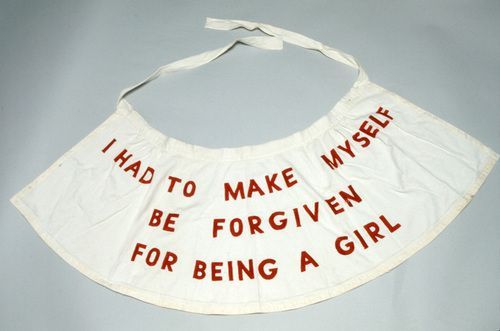
Seeing this tapestry with a feminist point of view, made me think of Louise bourgeois’ work, as part of the ‘New Tapestry’ movement.
The Jean Lurçat Museum of Contemporary Tapestry, in its exhibition ‘Tapestry? From Picasso to Messager’, examines the place and importance of this textile art, as well as its status in contemporary art. For female artists such as Louise Bourgeois, textiles have become a symbol of protest against their status in Western society.
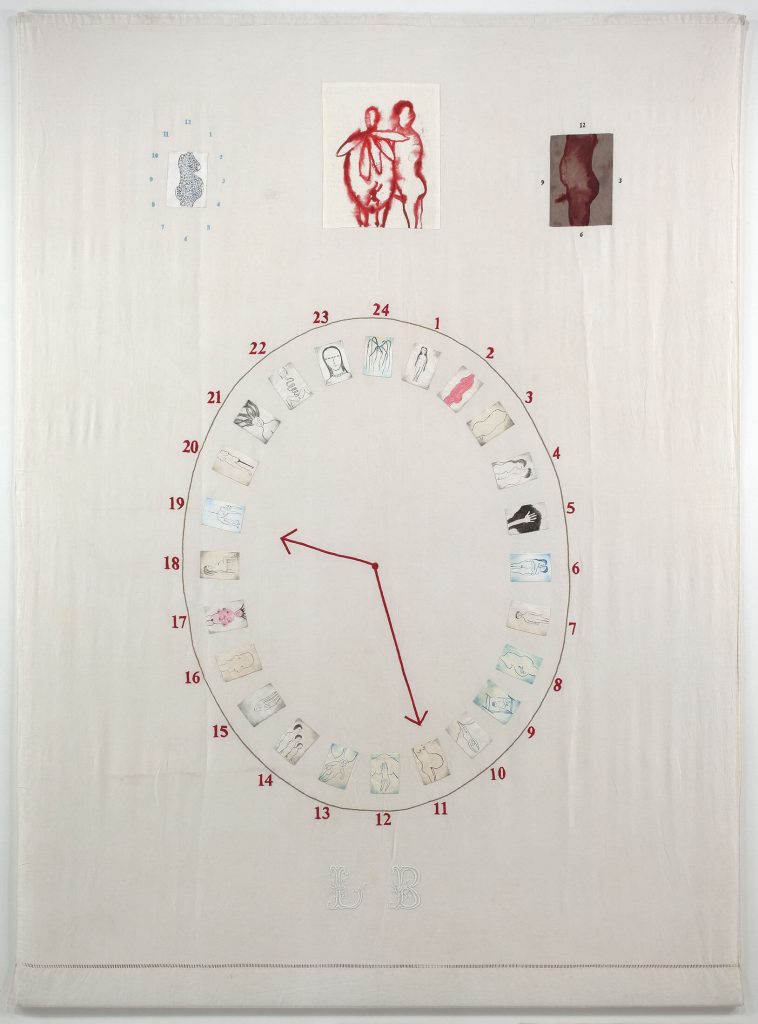
In this artwork, she explores life as a girl, woman, wife, mother, and artist, through her physical and emotional transformation as the hours advance.
4. The unicorn
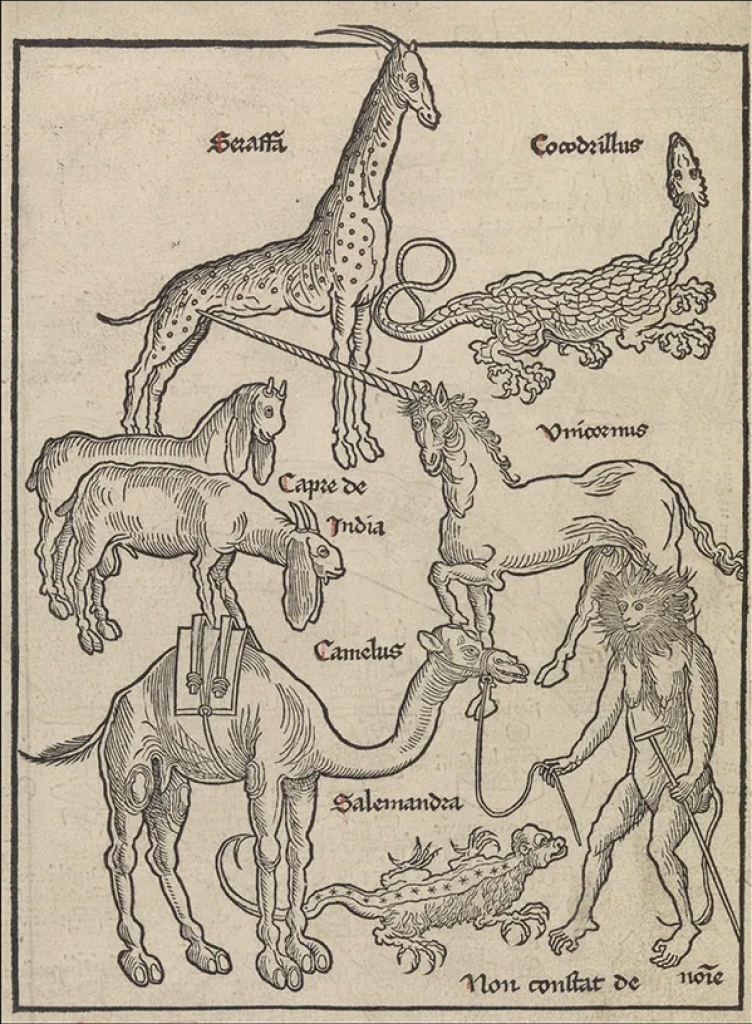
Unicorns were believed to be real animals in Medieval times. Some were supposedly spotted in Mount Sinai. Another print locates their native habitat in the Americas. Eminent scholars and explorers reported seeing this wild animal during their expeditions to distant lands, particularly India. However, it seems that the animal observed by the explorers was in fact the Javan rhinoceros, which has a horn on its skull.
It was in the 12th century that unicorns became a symbol of purity. They were associated with the Passion of Christ and his sign of chastity. Its horn was believed to be an antidote to poison and could purify contaminated water.
The belief was that only a virgin could tame a unicorn, with its reference to sexual innocence and experience
The portrait of the creature is fierce, tender, and pure. He embodies matters of faith, as well as the heart. In wedding portraits, he represents the taming of the beloved.
Leave a Reply